
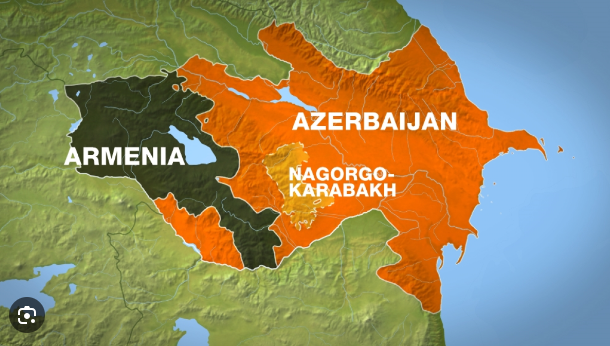
Following the 2023 Azerbaijani military offensive in Nagorno-Karabakh, more than 100,000 ethnic Armenians fled to neighboring Armenia within a matter of days. Faced with renewed fighting, fear of reprisals, and the collapse of local governance structures, families left behind homes, schools, churches, and generations of community life.
This mass exodus effectively erased the centuries-old Armenian presence in the region. What had been a vibrant Armenian-majority enclave became, almost overnight, nearly empty of its historic population. Only a very small number of individuals — primarily elderly or otherwise vulnerable residents unable or unwilling to flee — are believed to remain under Azerbaijani control.
The displacement has created an ongoing humanitarian crisis, as refugees in Armenia struggle with housing, employment, trauma, and uncertainty about whether they will ever be able to return safely. The events marked a profound demographic transformation and the near-total disappearance of Nagorno-Karabakh’s Armenian community.

The Armenia Security Partnership Act (H.R. 6840) is bipartisan U.S. legislation that would require the Secretary of Defense to officially certify whether Azerbaijan has taken specific actions toward peace with Armenia, including:
- fully withdrawing all military forces from Armenian sovereign territory;
- releasing all Armenian prisoners;stopping hostilities;
- recognizing a right of return for ethnic Armenians to Nagorno-Karabakh and committing to protect Armenian cultural and religious sites.

BP has been in the region since the early 1990s. Since then, it has been the largest investor in Azerbaijan, spending more than $84 billion on projects in that nation.
The United Nations (UN) has recently clarified international guidelines for businesses operating in conflict zones. The UN calls on companies to pay closer attention to human rights in these high-risk zones. The Office of the High Commissioner on Human Rights expanded its guidelines in August to add that businesses need to “identify and assess their adverse impacts on human rights and conflict, act to cease or prevent them, and track and communicate the measures taken.”
Recently, a group of business leaders sent a letter to Azerbaijan President Ilham Aliyev. In it, they wrote:
We urge the Government of Azerbaijan to meet its obligations as set out in international law, so that all people in Nagorno-Karabakh can live in peace and security, free from discrimination and the threat of inhuman and degrading treatment, and are able to move freely, including leaving and re-entering the area. Their safety, dignity, and liberty must be upheld.
But BP has said nothing even though it has a powerful influence on the Azerbaijan government. Sign the petition to demand that BP step up and speak out against Azerbaijan’s atrocities against the Armenians of Artsakh/Nagorno-Karabakh.
For More Information:
“Conflict and exodus in Nagorno-Karabakh: bp’s urgent responsibilities,” by Nora Mardirossian and Phil Bloomer, Business and Human Rights Resource Center, 4 October 2023
